Why Spring Is the Most Consequential Season in Commercial Construction Planning | Carrigg Commercial Builders
Author :
Carrigg Commercial Builders
Category :
Industry Insights
Read Time :
7 min read
Date:
April 22, 2026
Introduction
For commercial construction in New England, spring is not simply a change in weather. It is the season when decisions made in January and February either pay off or fall apart. Ground thaws, mobilization windows open, and federal fiscal calendars begin their march toward September 30 close-outs — all at the same time. For facility directors, federal contracting officers, and commercial real estate owners, spring is not the time to start planning. It is the time to execute a plan that should already be in place.
At Carrigg Commercial Builders, the Manchester, NH-based general contracting firm led by Robert Carrigg, spring represents one of the most operationally demanding periods of the year. Managing that demand well is the difference between projects that hit their milestones and projects that spend the summer recovering from a slow start.
The New England Construction Window Is Narrower Than It Looks
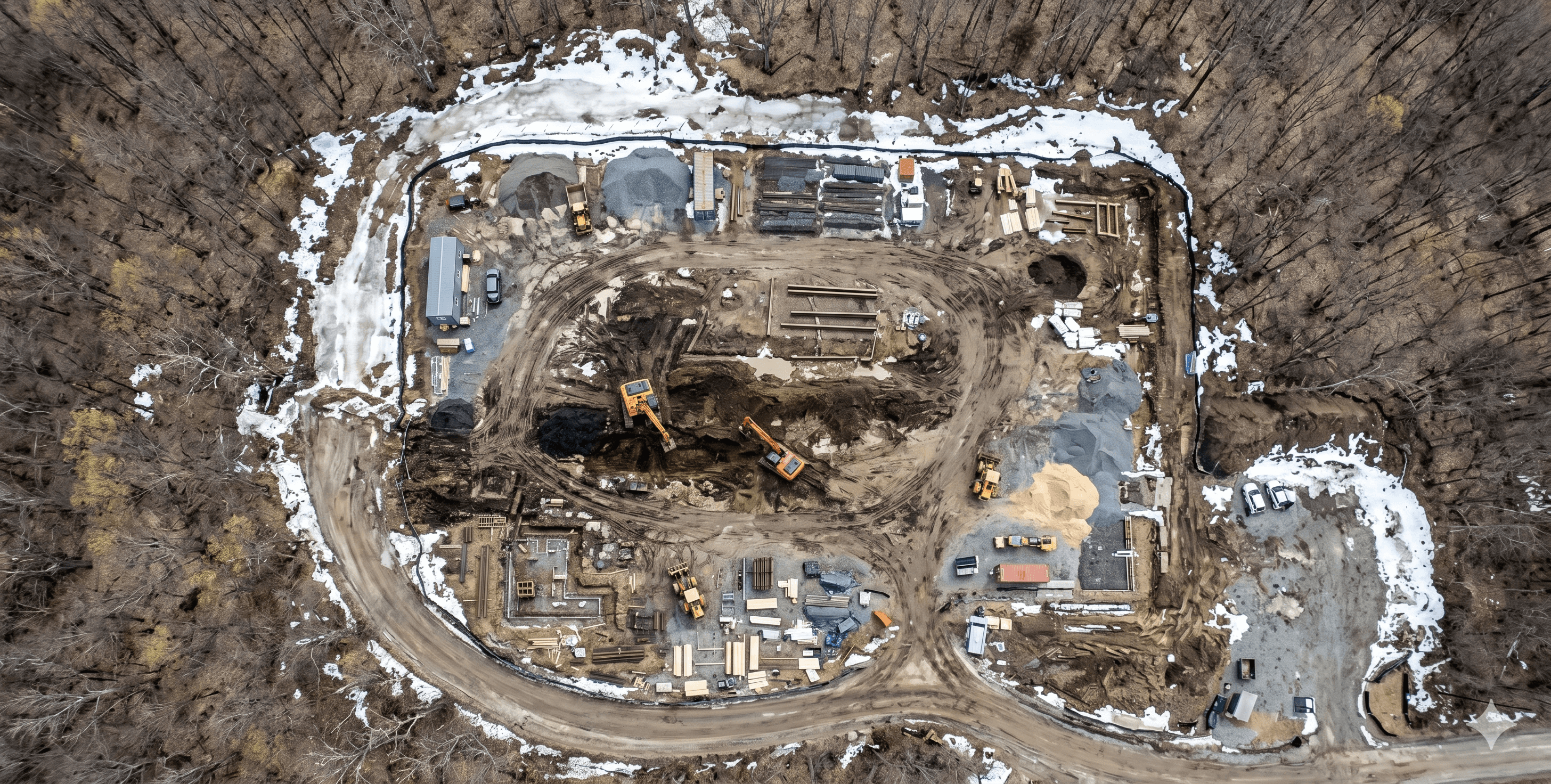
New England's climate compresses the viable outdoor construction season in ways that owners and project managers from other regions consistently underestimate. Frost depth, site drainage, and late-season cold snaps can push true mobilization well into April or even May in northern parts of the region. By the time a site is ready to support heavy equipment and foundation work, summer is already approaching — and with it, the labor demand that comes when every contractor in the region is competing for the same workforce.
For projects that involve site work, exterior envelope improvements, or new ground-up construction, this window is unforgiving. Owners who finalize their contractor selection in March and expect a May start are often setting themselves up for a June start at best. The contractors who serve their clients well are the ones who communicate that reality plainly, early, and with a schedule that accounts for it.
Federal Fiscal Timelines Don't Wait for the Weather
For clients working within federal procurement — including VA medical centers, GSA-managed facilities, and other government agencies — spring carries a different kind of urgency. The federal fiscal year ends September 30. Contracts that haven't been awarded and mobilized by late spring face serious pressure to deliver scope before that deadline, or risk funds being pulled back or reprogrammed.
Carrigg Commercial Builders has built a significant portion of its practice around federal construction work, including renovations at VA medical centers in Massachusetts and Vermont. That experience has given the company a precise understanding of how federal project timelines behave in practice — not just on paper. Spring mobilization for a federally funded project isn't just a construction milestone. It is a financial and programmatic one.
For contracting officers and facility managers, the question in April should not be whether a project will start. It should be whether the contractor already has submittals in review, materials on order, and a phasing plan that accounts for the occupied environment they're about to work in.
Occupied Facilities Require Spring Planning That Goes Beyond the Schedule
A significant share of commercial and federal construction happens inside buildings that cannot be vacated — healthcare facilities, administrative offices, and mission-critical operations that have no practical alternative while construction is underway. Spring planning for occupied-space projects involves a layer of coordination that goes well beyond the standard Gantt chart.
Infection control risk assessments, utility outage sequencing, interim life safety measures, and staff communication protocols all have to be developed before the first tool hits the wall. For healthcare clients in particular, the Joint Commission and facility accreditation requirements mean that an underprepared contractor isn't just an inconvenience — it's a compliance liability.
"The most dangerous phrase in occupied-space construction is 'we'll figure it out when we get there.'"
Experienced contractors in this space build their spring mobilization plans around the facility's operational calendar, not around the construction schedule alone. Patient census fluctuations, scheduled maintenance windows, and shift changes all factor into how and when work gets done.
What Spring Should Look Like If You're Already on Track
For owners and facility directors who engaged their contractor early and have a well-structured project entering spring, the season should feel controlled. Submittals should be substantially complete. Long-lead materials — switchgear, specialty HVAC equipment, medical gas systems — should already be on order. Phasing plans should be confirmed with facility operations staff. And the contractor's site superintendent should already know the building.
If any of those conditions aren't met by the time April arrives, the project is already behind — even if construction hasn't officially started.
Robert Carrigg and the team at Carrigg Commercial Builders approach spring mobilization as a discipline, not a formality. The preparation that happens in winter determines what spring can deliver. For clients who want to understand whether their project is truly ready to move, that conversation is worth having before the ground thaws — not after.
Carrigg Commercial Builders is a Service-Disabled Veteran-Owned Small Business providing commercial construction and general contracting services throughout New England. To connect with Bob Carrigg's team, visit carrigg.com or call (603) 262-4343.


